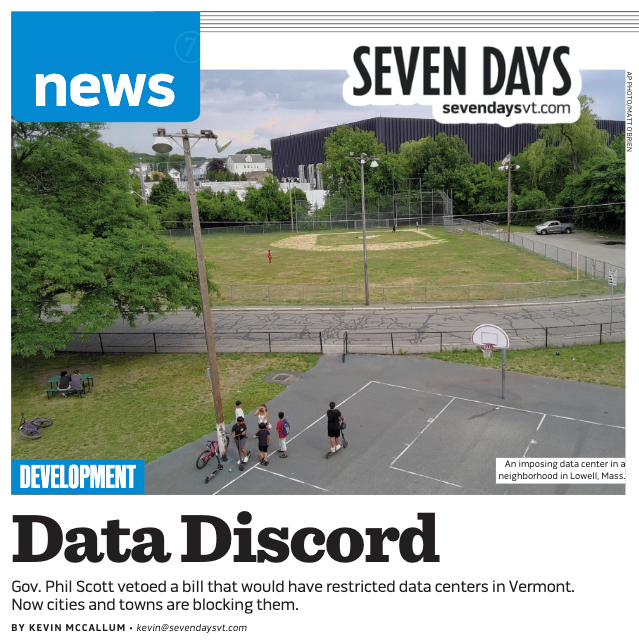
Across the country, communities are rising up to push back on large-scale data centers – many of which are being built to power the AI boom – and the skyrocketing energy costs, water use, and pollution that can come with them.
This year, a bill that would have provided some of the nation’s strongest data center protections received a governor veto, leaving Vermonters exposed to the negative impacts these facilities can have on communities. He was joined in killing the bill by 52 Representatives who voted to sustain his veto.
We need to send a message:
DON’T DATA CENTER VERMONT.
SIGN UP TO GET INVOLVED ⬇
%
Power needs of data centers could raise electricity bills nationally by 25%
%
One data center's emissions (in Memphis) is equivalent to 10% of Vermont's total air pollution
%
37% of the world's data centers are in the U.S. even though we’re only 4% of the global population
Let’s learn from other states and take action!
Take Action
Vermont lawmakers worked to pass a meaningful policy to protect Vermonters and our communities from Big Tech’s large-scale data centers – but the bill was vetoed. We must demand our legislators and statewide leaders stand up to protect our communities.
Vermont lawmakers worked to pass a meaningful policy to protect Vermonters and our communities from Big Tech’s large-scale data centers – but the bill was vetoed. We must demand our legislators and statewide leaders stand up to protect our communities.
Data Centers in Vermont: A Timeline
2025: Data Centers Proposed in St. Albans
The first known attempt to bring a large-scale data center to Vermont was in St. Albans in 2025 when Sean Adkins, then town manager, worked with a developer to bring one of two planned projects – the larger being 50 megawatts — to town. (VTDigger)
Winter 2026: Legislature Introduces H.727
Recognizing the rapid expansion occurring nationwide and the need to set proactive and preemptive guidelines, lawmakers spent much of the 2026 Vermont legislative session considering how Vermont could prepare and protect our environment and communities from unchecked data center development. The product was called the ‘Sustainable Data Center Deployment’ bill and was designed to ensure that if large-scale data centers came to Vermont, they would do so in a way that protected ratepayers, natural resources, local communities, and the state’s legally binding climate commitments.
H.727 would have established clear expectations before projects were proposed, providing greater transparency, oversight, and community protections while creating a more predictable process for future development.
Spring 2026: H.727 Passes House & Senate
The bill passed both the House and Senate with overwhelming bipartisan support, including a 26-3 vote in the Senate.
May 28, 2026: Governor Scott Vetoes H.727
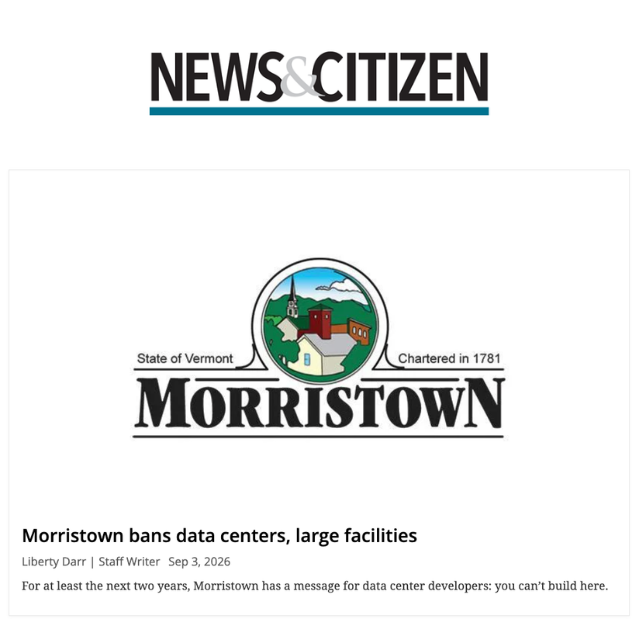
Unfortunately, Vermont Governor Phil Scott disagreed and vetoed the bill. 52 Republican legislators followed suit and voted to uphold the Governor’s veto in an override attempt by the legislature. As a result, H.727 did not become law and Vermonters remain vulnerable to unchecked data center development in the Green Mountain State.
That day, Americans for Prosperity, a dark money-funded, out-of-state interest group weighed in, thanking the Governor for his veto.
June 2026: Data Center Considered in Vernon
Less than a month after H.727 was vetoed, news broke that a data center is one of the three potential projects being explored in Vernon at the site of the former Vermont Yankee nuclear power plant. (VTDigger)
About Data Centers
Data centers are arriving in communities across the country faster than anyone can keep up — and in state after state, the story has been the same: data centers are using enormous amounts of energy, water, and land, leading to higher costs and more pollution. Large-scale data centers rely on water to manage the heat generated by computer servers. Right now, communities are dealing with very real impacts on their water quality and water supply. And to keep up with the sky-rocketing demand in energy, utilities are building enormous new infrastructure to serve the data centers, and in many places people are paying more for their electricity because of it – all at a time when household budgets are already strained.
Vermont currently does not have any large-scale data centers, but that does not mean the state is immune to their development. There have already been proposals to develop data centers in Vermont, and with the meteoric rise of AI, pressure for their development will continue. There are many significant issues with large-scale data center development – and overwhelming public concern – across the nation and in Vermont. Currently, Vermont has inadequate protections to safeguard against the potential negative and costly consequences of data center development.
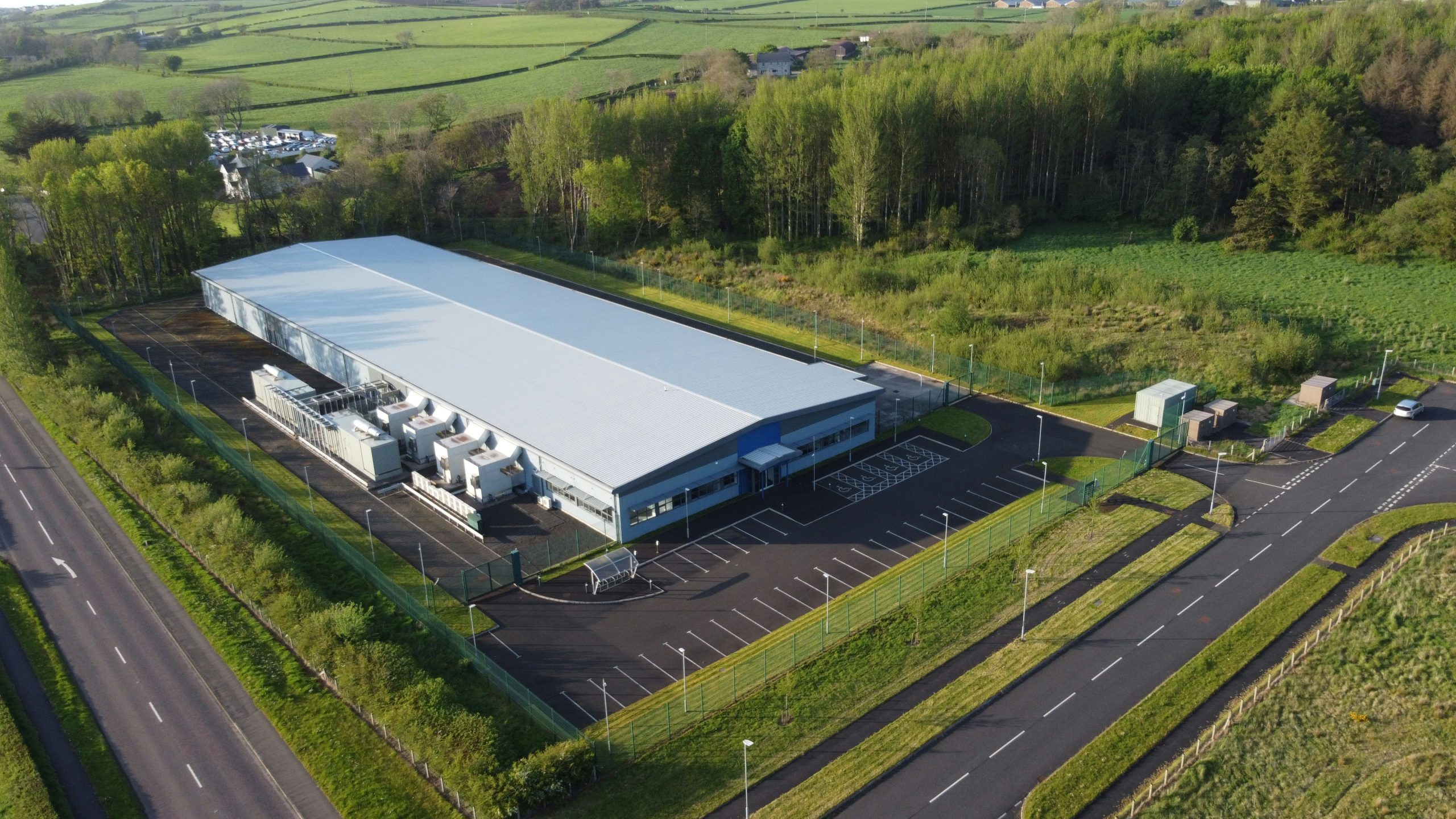
Let’s protect our state from Big Tech and tell our elected officials: Don’t Data Center Vermont!
Press