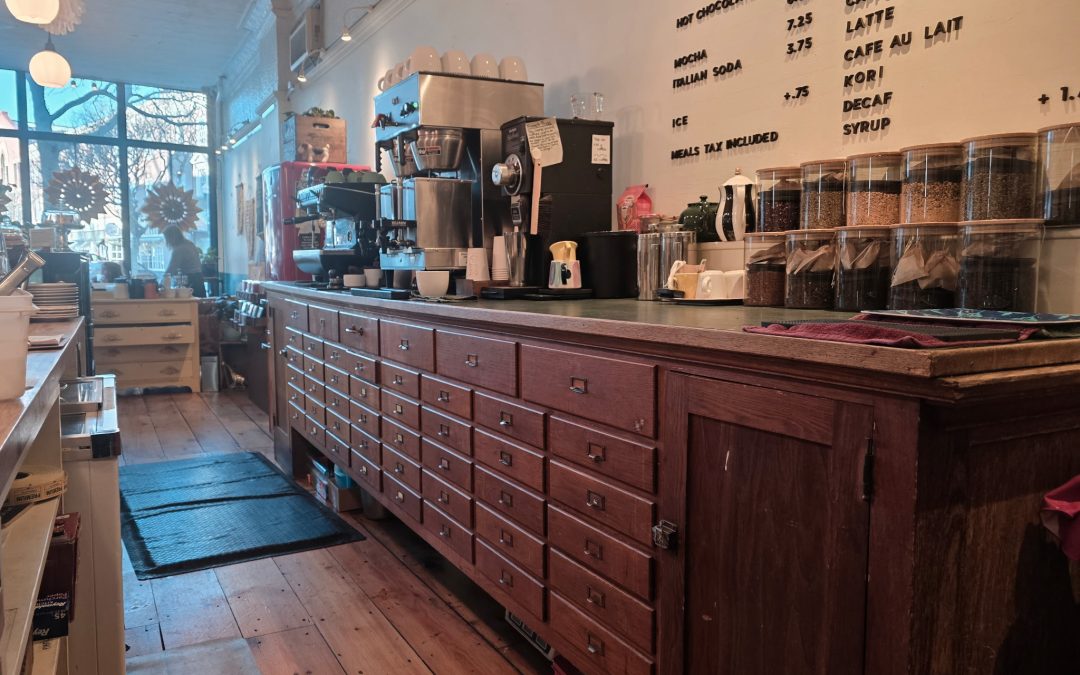
Pictured above is a postal sorting cabinet living a second life. It was then taken from a Deconstruction Works site in Williamstown, MA and repurposed as a cafe bar at Flat Iron Exchange in Rockingham, VT
Our economy is built on extraction and disposal. We mine it, make it, ship it, use it, and then we throw it away. From fast fashion to single-use plastics to entire buildings torn down and sent to the landfill, waste isn’t just a trash problem. It’s a climate problem and a community problem.
But across Vermont, people are building a different model. This week on the Democracy Dispatch podcast, you’ll meet three passionate entrepreneurs, each addressing the waste problem through innovative solutions in their respective fields. Their stories not only inspire action but also highlight practical steps we can all take to reduce our impact on the planet.
In 2018, Waterbury’s Jamie McKenzie, a new mother, became acutely aware of the waste crisis while listening to a news report about China ceasing the acceptance of U.S. recyclables. This moment sparked a journey towards zero waste living for Jamie, as she realized the extent of plastic pollution and the impact of single-use products on the environment. Inspired by this revelation, she began exploring alternatives and eventually opened Rise Up Refill that focuses on reducing dependency on single-use plastic, providing a space for community members to refill their household essentials.
Erich Kruger, the founder of Deconstruction Works in Dummerston, has been addressing the waste problem through deconstruction rather than traditional demolition. He recognized that a significant amount of materials from buildings could be salvaged and reused. By carefully dismantling structures by hand, Erich’s team rescues valuable items like hardwood flooring, kitchen cabinets, and fixtures, diverting them from landfills. His work not only supports sustainable building practices but also connects those with surplus materials to those in need.
Lucy Higgins experienced the textile waste issue firsthand after receiving an overwhelming number of baby clothes during her recent pregnancy. Recognizing the fast fashion crisis and its contribution to landfill overflow, she developed an app called The Loop from her home in Cambridge. This innovative platform allows parents to swap baby and toddler clothes within their local communities, promoting the circulation of gently used items and reducing the need for new purchases. By facilitating these exchanges, Lucy’s solution addresses the waste problem and the financial burden of raising children all while building community.
Also on the episode, I give updates on bills that passed the Senate last week. One that mandates identification of law enforcement agents be displayed and another that protects Vermonters from civil arrests in sensitive locations.