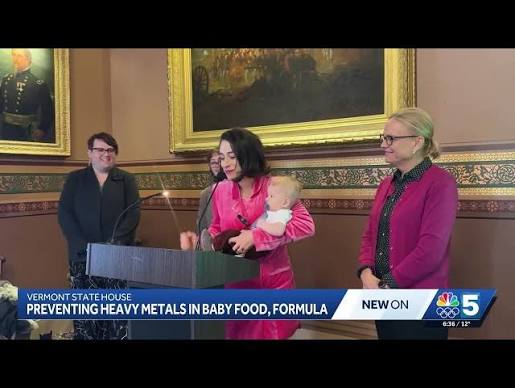
Justin Marsh, Anna Seuberling (VPIRG), Rep. Mary-Katherine Stone, baby Salem, and Sen. Martine Larocque Gulick at a press conference urging the passage of H.536 in the statehouse. Photo thumbnail by WPTZ
Vermont has led the way on toxics reform for decades. We’ve continued to build upon legislation at the vanguard, whether it’s banning fracking, single-use plastic bags, or the sale of consumer products containing PFAs – harmful “forever chemicals”. Last biennium, we worked on a policy that added banning artificial turf with PFAs to the list. Now that legislation is showing up directly in the community of Hinesburg, where there is a proposal to install artificial turf at the state’s largest high school.
Amidst the debate at Champlain Valley Union High School is Rep. Phil Pouech (D-Hinesburg), a former Selectboard member in his second term in the Vermont House. He joins me this week to talk about how Vermont’s recent move to ban PFAS in turf is showing up in his town and raising questions about health, safety, and what communities should be investing in.
Then, Rep. Mary-Katherine Stone (D-Burlington) returns to the podcast to give me the scoop on a bill she sponsored that is now in the Senate. H.536 would limit heavy metals in baby food and provide more transparency for consumers. How do these metals make it into food, causing lifelong impacts on kids’ health? And what measures does the bill include that would yet again mark us as the first in the nation?
Last night, we were in Rutland with partners from VPIRG and Planned Parenthood of Vermont Action Fund for a forum with the Democratic primary candidates for Lieutenant Governor – Esther Charlestin, Molly Gray, and Ryan McLaren. Check out this coverage of the event from WPTZ.
Next week, I’m excited to share my interview with Bob Mello, the author of When the Trees Came Back: The Great Battle to Save Vermont’s Forests. The book tells the story of how Vermonters responded via a mix of grassroots action, policy, and changing economics to help bring the forests back after nearly complete deforestation in our state 150 years ago. It’s available for pre-order now, and you, dear readers, can snag 15% off at checkout with code TREES15.
Finally, I want to thank you all for listening to the podcast, as last week we reached our 5,000th listen! It’s nothing major, but it’s an achievement worth celebrating, and I’m grateful for the continued engagement and clicks on this labor of love. If you’ve enjoyed any episode of the podcast, consider a tip via a small donation to Vermont Conservation Voters, as we gear up for the 2026 elections ahead.