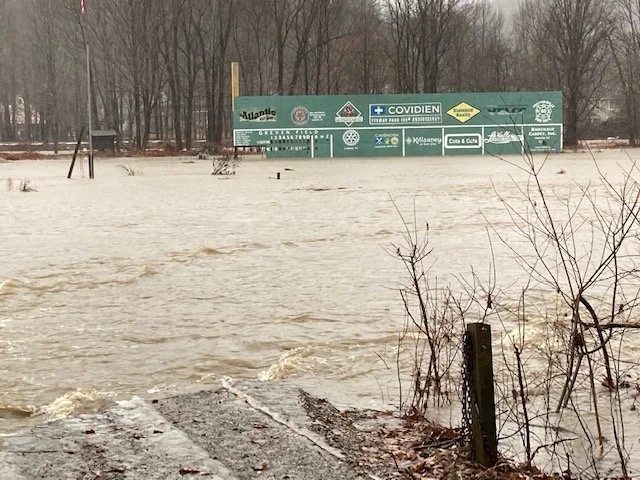
Greven Field in Cavendish on Dec. 18, 2023, courtesy of Cavendish Connects
My name is Sereena, I’m the 2026 Legislative Intern for Vermont Conservation Voters, Vermont Natural Resources Council, and Vermont Planners Association. I’m pleased to be the guest host on this week’s Democracy Dispatch podcast.
We all have a place that we call “home,” and our homes have so much meaning.
For myself, home looks like the Caribbean islands where my family is from, and my home state of Maryland, where our coastal regions hold a special significance to me. These homes are places born from dark histories of colonialism and slavery, yet incredibly transformed into sacred spaces of sovereignty, security, and care that communities hold dear today. For others, like many river communities in Vermont, home is a place symbolic of the history of the state itself, with some of Vermont’s earliest settlements developing as milling and agricultural towns built along the land’s waterways.
But the climate crisis is rapidly changing our world and making many of these longstanding homes uninhabitable in the traditional ways in which communities have lived. From extreme storms and sea level rise harming the Caribbean and Maryland’s coastal areas, to extreme floods devastating Vermont’s river communities, climate change is unprecedentedly threatening our homes.
The response from some when viewing these climate impacts is to tell people to leave. But how do you ask communities with deep cultural and historic ties to the land, like those mentioned here, to simply abandon their homes? In many cases, this is just too heavy of a burden to ask of communities, and it also isn’t always the right option to pursue.
In our conversation, I first talk with host Justin Marsh about ways to engage with communities on this topic through a care- and justice-centered approach that focuses on peoples’ history and cultural connection to their homes. Then, I invite residents of Wolcott, Brandon, and Cavendish – three towns across different regions and watersheds of Vermont – to share about what “home” means to them along the state’s rivers and how they’ve been impacted by climate change.
To close, we dive into the futures that our guests imagine for their communities, with efforts ranging from moving key infrastructure and resources away from particularly flood-prone areas, to investing in natural infrastructure and trying to create a more healthy balance in the water cycles where they live. The throughline across these perspectives is a commitment to building sustainable futures in which these communities can persist, rather than fully abandoning these areas. This highlights the endless possibilities available to us when we go back to basics and just imagine the futures that we want to have.
I hope this discussion inspires you to think deeply about what home means for you, how the climate crisis has already shown up in your neighborhood, and, especially, what you imagine as the future of your home and community – remember, there are no wrong answers for the futures we can imagine!