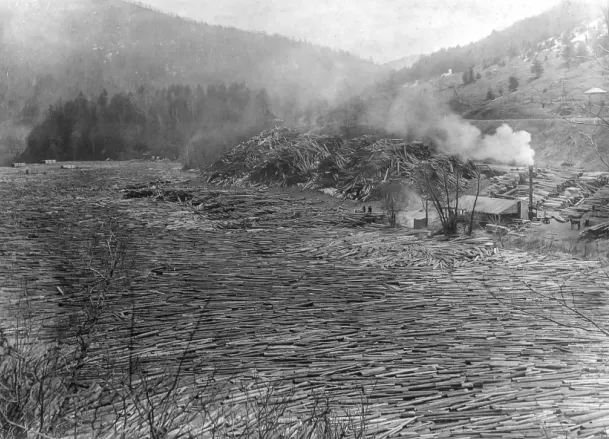
This photo of a log drive on the White River near Sharon gives a sense of the scope of Vermont’s lumber industry early in the last century — a time when the state and some private landowners were starting to take action against excessive cutting. Photo courtesy of the Vermont Historical Society
In the late 1800s, Vermont was a very different place. Its hills were largely cleared, its soils exhausted, and its economy struggling under the weight of overused land. In When the Trees Came Back: The Great Battle to Save Vermont’s Forests, retired judge and historian Bob Mello tells the story of how Vermonters confronted that crisis and how the state’s forests slowly returned.
In this week’s episode, we explore what that history can teach us today. From the tension between economic survival and environmental protection to the long-running debate over how land should be used, many of the challenges Vermonters faced 150 years ago feel strikingly familiar.
As current conversations around development, conservation, and rural land use continue to unfold, Mello reflects on the hard lessons learned from Vermont’s past, and what they might mean for the choices we’re making now.
I really enjoyed my chat with Bob and the book itself. It’s received rave reviews from activist Bill McKibben, forester Ethan Tapper, and former Vermont Department of Forests, Parks, and Recreation commissioner Mike Snyder.
When the Trees Came Back will be released tomorrow, April 21st, in conjunction with Arbor Day. It’s available for pre-order now, and you can snag 15% off at checkout with code TREES15. It will be available at the Vermont Historical Society’s bookstore and from local book sellers around the state. For those looking for an eBook, you can find it from select online retailers.